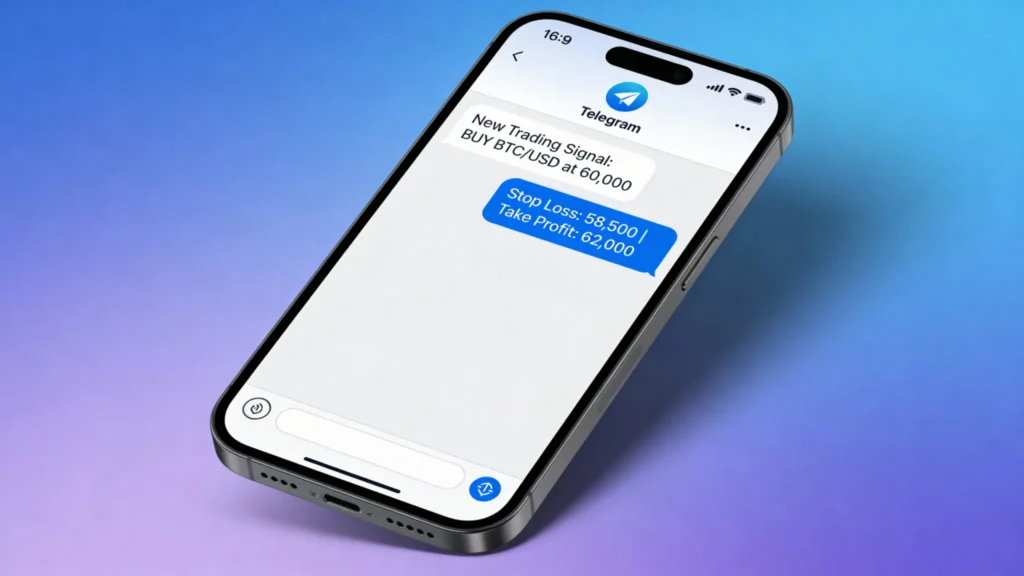
Did you know that over 85% of beginner traders lose money within their first year? I’ve been there too – overwhelmed by complex charts and confusing market jargon. But here’s the game-changer: Telegram trading signals can bridge that knowledge gap, giving you expert insights delivered straight to your phone!
Let me tell you about my first disaster. Back in 2019, I threw $500 into Bitcoin without knowing what a stop loss was. Within three days, I’d lost 60% of it because I had zero clue about risk management. I was checking my portfolio every five minutes, my trading psychology was completely shot, and I was making emotional decisions left and right.
That’s when I discovered telegram channels trading communities. Suddenly, I had access to experienced traders sharing their entry points, take profit levels, and most importantly – their reasoning behind each trade. These trading signals for beginners became my training wheels.
The beauty of crypto trading signals and forex trading signals on Telegram is the real-time nature. You’re not waiting for some newsletter or blog post – you get trading alerts instantly when opportunities arise. I remember getting my first profitable signal at 2 AM – a quick scalp on ETH that netted me 8% while I was sleeping. That’s when it clicked.
But here’s what nobody tells beginners about signal providers: not all signals are created equal. I learned this the hard way after following a channel that promised “guaranteed profits” (spoiler alert: nothing’s guaranteed in trading). The key is finding providers who teach you why they’re making trades, not just what to buy.
What really changed my game was discovering automated trading tools that could execute these signals for me. No more missing trades because I was in a meeting or fumbling with position sizing calculations. The combination of quality signals and proper signal execution turned my trading from stressful gambling into a systematic approach.
Whether you’re completely new to trading or you’ve been burned by going solo, telegram trading signals offer a structured way to learn while potentially earning. In this guide, I’ll walk you through everything I wish someone had told me when I started – from finding reliable signal providers to setting up proper risk management that actually protects your capital.
What Are Telegram Trading Signals and Why Beginners Love Them
I’ll never forget my first week trading crypto back in 2021. I was staring at charts that looked like abstract art, trying to figure out if Bitcoin was about to moon or crash. Then a buddy told me about these things called trading signals on Telegram. “Dude, just join this channel,” he said. “They tell you exactly when to buy and sell.”
At first, I thought it sounded too good to be true. But here’s the thing – trading signals are basically professional traders or algorithms doing the heavy lifting for you. They analyze the markets, spot opportunities, and send you alerts with specific instructions like “Buy BTC at $42,500” or “Sell ETH target $3,200.” It’s like having a trading mentor whispering in your ear, except they’re doing it through your phone.
Telegram channels became the go-to platform for this stuff, and honestly, I get why. The app is fast, notifications are instant, and you can join channels with thousands of other traders. Plus, most signal providers prefer Telegram because they can broadcast to everyone at once without worrying about delays or algorithm changes like on other social platforms.
What really hooked me as a beginner was how these trading alerts took the guesswork out of everything. Instead of spending hours trying to understand RSI, MACD, and all those fancy indicators, I could just follow along. The signals usually come with entry points, stop losses, and profit targets – basically a complete roadmap for each trade.
But here’s where I made my first big mistake. I thought all signal providers were created equal. Spoiler alert: they’re not. Some channels are run by experienced traders who’ve been in the game for years, while others are just copy-pasting signals from elsewhere or worse, making random calls hoping something sticks.
The beauty of Telegram trading signals for beginners is the learning aspect too. Good signal providers don’t just tell you what to do – they explain why. They’ll share their analysis, point out key support and resistance levels, and help you understand market psychology. It’s like getting a masterclass while you trade.
I remember joining my first premium signal channel and feeling like I’d unlocked some secret trading society. The community aspect was incredible – thousands of traders sharing experiences, asking questions, and celebrating wins together. Even when trades went south, there was always someone there to remind you that losses are part of the game.
Essential Components of Quality Trading Signals
I learned this the hard way when I first started following Telegram signals back in 2019. Got burned so many times because I didn’t know what to look for in a quality signal. One guy would just post “BTC going up 🚀” and I’d throw money at it like an idiot.
Here’s what separates the wheat from the chaff when it comes to trading signals. First up, entry points – and I mean specific ones, not some vague “buy the dip” nonsense. A decent signal should tell you exactly where to enter, whether that’s a market order or a limit order at a specific price level.
I remember this one signal provider who’d give three entry zones – like “Entry 1: $42,500, Entry 2: $42,200, Entry 3: $41,800” for Bitcoin. Smart approach because it let you dollar-cost average into positions instead of going all-in at once. Wish I’d understood that concept earlier.
Next comes the stop loss, which honestly saved my trading account more times than I can count. Any signal without a clear stop loss is basically gambling advice dressed up as trading wisdom. I’ve seen too many traders get wiped out because they followed signals that didn’t specify where to cut losses.
The stop loss should make sense too. If someone’s telling you to buy ETH at $2,000 with a stop loss at $1,500, that’s a 25% risk per trade – way too much for most people. Good signals typically risk 2-5% max.
Take profit levels are where things get interesting. Quality signals don’t just give you one target – they give you multiple exit points. Something like “TP1: $2,100, TP2: $2,200, TP3: $2,350” lets you scale out of positions and lock in profits along the way.
But here’s where most beginners mess up – they ignore the risk management part completely. I used to see a signal with 3:1 reward-to-risk ratio and think “easy money!” without considering position sizing. Nearly blew my account doing that.
Proper signal analysis means looking at the bigger picture. Does the signal make sense with current market conditions? Is the provider showing their track record? Are they explaining their reasoning or just posting random calls?
The best signals I’ve followed included basic technical analysis – support and resistance levels, trend direction, maybe some RSI or MACD context. Not because I needed to become a chart wizard, but because it helped me understand why we were making the trade in the first place.
Trust me, once you start filtering signals based on these components, your results will improve dramatically. No more YOLO trades based on rocket ship emojis.
Setting Up Your Telegram for Trading Success
I’ll be honest – when I first started following trading signals on Telegram, my setup was a complete mess. I had notifications turned off because they were annoying me during meetings, missed half the signals because my phone was on silent, and somehow managed to join three different scam channels thinking they were legit. Yeah, not my finest hour.
The thing about telegram setup for trading is that it’s way more important than most people realize. Your phone becomes your lifeline to the markets, and if it’s not configured properly, you’re basically trading with one hand tied behind your back.
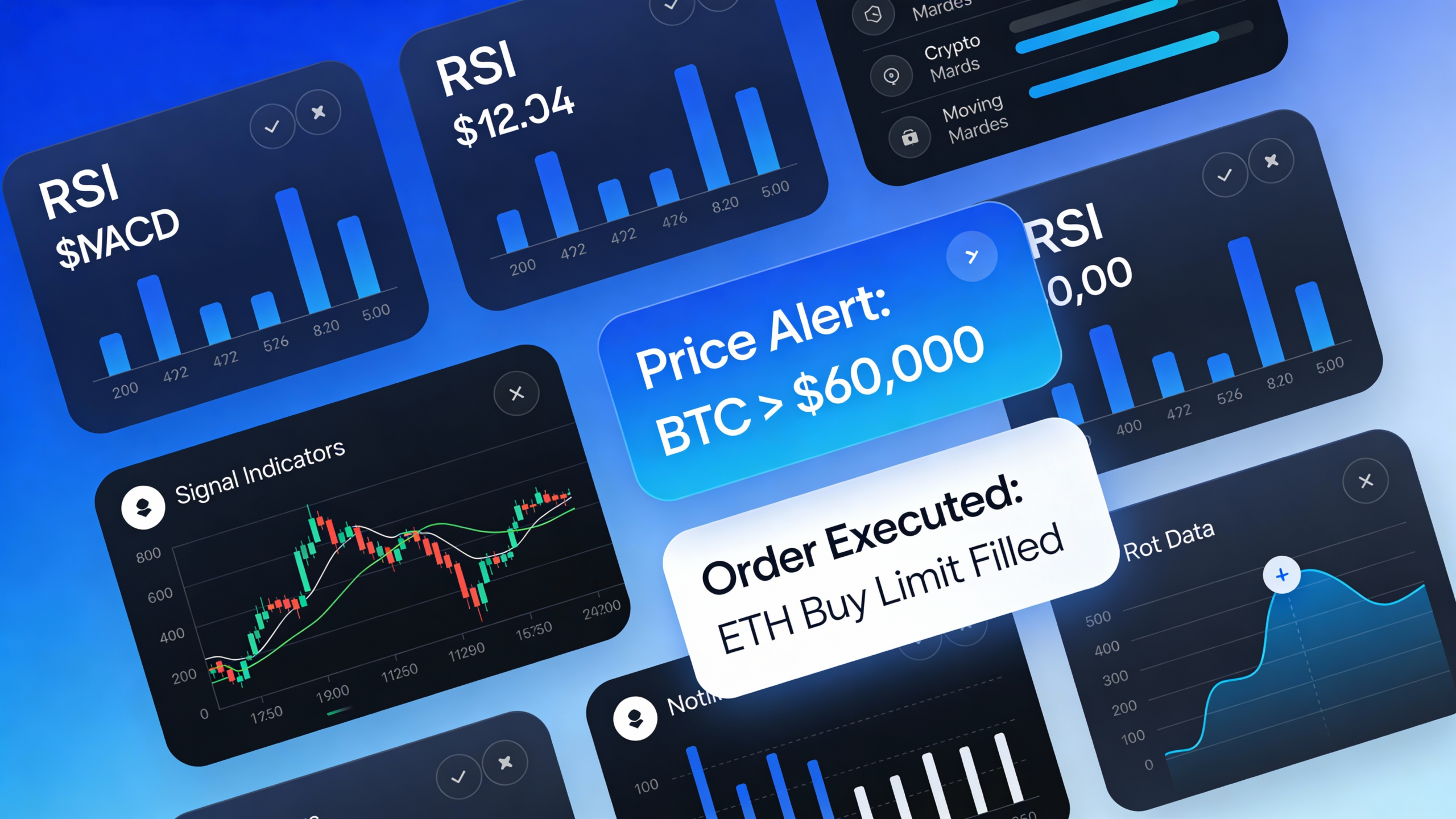
First things first – trading notifications need to be bulletproof. I learned this the hard way when I slept through a massive Bitcoin pump because my phone was in do-not-disturb mode. Now I have a dedicated trading profile that overrides all my quiet settings. Go to Settings > Notifications and Sounds, then create a custom notification sound for your signal channels. Make it something you’ll actually hear – I use this obnoxious air horn sound that jolts me awake even from a deep sleep.
Here’s where most beginners screw up: they treat mobile trading like it’s optional. It’s not. The crypto markets don’t care if you’re stuck in traffic or grabbing coffee. I keep my exchange apps right next to Telegram on my home screen, and I’ve practiced executing trades so many times I can do it with my eyes closed. Muscle memory matters when you’ve got seconds to act on a signal.
But speed means nothing if you’re not secure. Telegram security should be your top priority because scammers are everywhere in this space. Enable two-factor authentication immediately – no exceptions. I also recommend turning off the “Allow calls” feature because fake signal providers love to cold-call people pretending to be from legitimate channels.
One trick that saved my butt multiple times: create a separate Telegram account just for trading. Use a different phone number, different email, the works. This way, if something goes wrong with your main account, your trading channels stay intact. Plus, it keeps your personal chats separate from all the market chaos.
The notification timing is crucial too. Set up custom notification schedules for different time zones if you’re following international signal providers. I follow some European channels that post signals at 3 AM my time, so I have specific quiet hours configured to wake me up only for the most important alerts.
Trust me, spending an hour getting your telegram setup right will save you countless missed opportunities and headaches down the road.

How to Find and Evaluate Reliable Signal Providers
Man, I wish someone had given me this advice three years ago when I first started hunting for signal providers. I literally threw $200 at the first flashy Telegram channel I found because they promised “guaranteed 90% win rate.” Spoiler alert: I lost most of it within two weeks.
The thing about finding good trading channels is that the best ones usually don’t have the flashiest marketing. I’ve noticed that reliable signal providers tend to be more transparent about their losses than their wins. If you see a channel bragging about nothing but green trades, run the other way.
Here’s my checklist for evaluating signal providers:
First, look for signal verification. Any decent provider should show you their full trade history – not just cherry-picked screenshots. I always ask to see at least 3 months of verified results before I even consider paying for anything. Some providers use third-party verification services, which is even better.
Second, watch how they handle losing streaks. Everyone has them, but good providers explain what went wrong and adjust their strategy. Bad ones just delete the losing signals and pretend they never happened. I learned this the hard way when I noticed my “profitable” provider kept having gaps in their signal history.
Third, check if they provide proper risk management. If a signal just says “buy XYZ coin” without mentioning stop losses, position sizing, or risk-reward ratios, that’s a red flag. Professional traders always think about risk first, profits second.
Red flags to watch for:
Telegram scams are everywhere in the signal space. If someone DMs you claiming to be from a popular channel asking for payment through weird methods, it’s probably fake. I once almost sent Bitcoin to a scammer impersonating a legit provider – thankfully I double-checked the username first.
Also, be suspicious of channels that pressure you to join “VIP” groups immediately. Good providers let you evaluate their free signals first. They’re confident enough in their results to let you see what you’re paying for.
One trick I use is to paper trade their signals for a month before risking real money. Create a spreadsheet and track every signal they give. This gives you a realistic picture of their performance without the marketing hype.
The best signal providers I’ve found actually educate their members about why they’re making certain trades. They explain their analysis, market conditions, and reasoning. This helps you learn instead of just blindly copying trades.
Risk Management Strategies for Signal Trading
I’ll be brutally honest – I blew up my first trading account following signals. Not because the signals were bad, but because I had zero clue about risk management. I was throwing 50% of my account at every single trade like some kind of crypto cowboy.
The wake-up call came when I lost $3,000 in a single day. That’s when I realized that successful signal trading isn’t just about finding good signals – it’s about protecting your capital when things go sideways.
Position sizing became my religion after that disaster. Now I never risk more than 2-3% of my total account on any single trade, no matter how “sure fire” the signal looks. I learned this the hard way when a signal provider I trusted had three losing trades in a row. If I’d been risking 20% per trade, I would’ve been toast.
Here’s my simple position sizing formula: If my account is $10,000 and I want to risk 2%, that’s $200 max loss per trade. If the signal has a stop loss that’s 10% away from entry, I can only buy $2,000 worth of that crypto. Math doesn’t lie, and neither does your account balance.
But here’s where trading psychology gets tricky. Even with perfect position sizing, I found myself getting emotional about losses. I’d double down on the next signal to “make it back” – classic revenge trading. The market doesn’t care about your feelings, and it’ll happily take more of your money if you let emotions drive.
What saved me was creating strict rules around money management. I set daily loss limits – if I’m down more than 5% in a day, I close my laptop and walk away. No exceptions. I also learned to take partial profits when signals hit their first target. Yeah, I might miss some bigger moves, but I sleep better at night.
The 1% rule changed everything for me. On winning trades, I’d move my stop loss to breakeven once the trade moved 1% in my favor. This way, even if the trade reverses, I don’t lose money. It’s like getting free insurance on every position.
Another game-changer was keeping a trading journal. I track every signal I follow, why I took it, how much I risked, and what happened. After three months, I noticed I was consistently losing money on weekend signals. Turns out, I was being less careful with my analysis on Sundays. Data doesn’t lie.
Remember, signal providers aren’t risking your money – you are. They might be right 70% of the time, but if you’re risking too much on that 30% of losing trades, you’ll still end up broke. Protect your capital first, profits second.

Step-by-Step Guide to Executing Your First Signal
Alright, let’s get your hands dirty with actual signal execution. I remember my first signal – I stared at my phone for like 20 minutes, paralyzed by fear. The signal was clear: “BTC/USDT LONG at 42,500, TP 43,200, SL 42,000.” Simple enough, right? Wrong. I had no clue what I was actually doing.
Here’s the step-by-step process I wish someone had walked me through back then. First, read the entire signal twice. I can’t tell you how many times I’ve seen people jump on the entry price without even noticing the stop loss. Take your time – the market isn’t going anywhere in the next 30 seconds.
Next up is trade placement. Open your exchange app (Binance, Bybit, whatever you’re using) and navigate to the trading pair mentioned in the signal. Now here’s where it gets tricky – you need to decide on your position size. Never, and I mean NEVER, risk more than 2-3% of your account on a single trade. I learned this the hard way when I threw 20% at a “sure thing” signal and watched it hit my stop loss within an hour.
When it comes to order types, you’ve got options. Market orders execute immediately at current price – great if you’re worried about missing the entry. Limit orders let you set your exact entry price, which is perfect when the signal gives you a specific level. I usually go with limit orders because I’m cheap and hate paying extra fees, but sometimes market orders are necessary when momentum is building fast.
Here’s the part that separates beginners from pros: setting your stop loss IMMEDIATELY after your entry fills. Don’t wait, don’t think about it, just do it. I’ve watched too many traders get distracted and forget this crucial step. Your stop loss is your insurance policy – treat it like one.
Now comes the hardest part: trade monitoring. You don’t need to stare at charts all day, but check in every few hours. Set price alerts on your phone so you know when you’re approaching your take profit levels. I use TradingView alerts because they’re reliable and don’t drain my battery like keeping the exchange app open constantly.
One last thing – keep a trading journal. Write down what signal you followed, why you took it, and how it performed. This simple habit transformed my trading more than any fancy indicator ever did. Trust me on this one.
Common Mistakes and How to Avoid Them
Man, if I had a dollar for every trading mistake I made in my first year of following Telegram signals, I’d probably have enough to cover all my losses and then some. The thing about beginner errors is they’re like stepping on the same rake over and over again – you know it’s gonna hurt, but somehow you keep doing it anyway.
The biggest one that got me? FOMO trading. I’d see a signal come through at 2 AM, and instead of sticking to my plan, I’d jump in with way too much money because “this one looked really good.” Lost about $800 in a single week doing this nonsense. The signal trading pitfalls are real, and they’ll eat your account alive if you’re not careful.
Here’s what I learned the hard way: position sizing is everything. When I started, I was throwing 20-30% of my account at single trades because the signal provider said they were “high confidence.” That’s like betting your rent money on a coin flip. Now I stick to 2-3% max per trade, no matter how “sure” the signal looks.
Another killer mistake? Not setting stop losses properly. I’d get into a trade, see it go against me, and think “oh, it’ll come back.” Spoiler alert: it usually didn’t. I watched a $200 loss turn into a $600 loss because I couldn’t accept being wrong. Trading discipline isn’t just some fancy term – it’s literally what separates people who make money from people who donate their savings to the market.
The revenge trading thing nearly destroyed my account too. You know how it goes – you lose a trade, get pissed, and immediately jump into another one to “get even.” Did this three times in one day and turned what should’ve been a small loss into my worst trading day ever. Now when I lose a trade, I literally close my laptop and go for a walk.
Here’s something nobody talks about: following too many signal channels at once. I was subscribed to like 8 different channels, getting 30+ signals a day. It was chaos. You can’t possibly manage that many trades properly, and you end up making emotional decisions instead of logical ones. Pick 1-2 quality channels and stick with them.
The “doubling down” trap got me good too. When a trade went against me, I’d add more to “average down” my entry. Sometimes it worked, but when it didn’t, holy crap did it hurt. Lost nearly $1,200 learning that lesson. Now I have a strict rule: one entry per signal, period.
Trust me on this – these mistakes are expensive teachers, but they don’t have to be. Learn from my stupidity and save yourself some serious cash.
Conclusion
Starting with Telegram trading signals doesn’t have to be overwhelming. Focus on education first, practice with small amounts, and always prioritize risk management over profits. I’ve watched too many beginners jump straight into scalping without understanding the basics, only to blow their accounts within weeks.
Here’s what I wish someone had told me when I started: don’t try to master everything at once. Whether you’re interested in long term investing or quick scalping opportunities, pick one approach and get really good at it first. I made the mistake of trying to do both simultaneously and ended up being mediocre at everything.
Portfolio management becomes crucial once you start following multiple signals. I learned this the hard way when I realized I had 80% of my portfolio in correlated assets during a market crash. Asset allocation isn’t just fancy Wall Street talk – it’s what keeps you alive during those brutal drawdowns that nobody talks about in the Telegram groups.
Diversification saved my butt more times than I can count. But here’s the thing about correlation that most beginners miss: just because you’re trading different coins doesn’t mean you’re diversified. When Bitcoin dumps, pretty much everything follows. Understanding these relationships helped me develop better hedging strategies.
The beauty of modern trading automation is that you don’t need to be a coding genius to benefit from algorithmic trading. Tools like copy trading and social trading have democratized access to strategies that used to require expensive hedge fund connections. Mirror trading and signal copying let you literally piggyback on successful traders’ decisions.
But automation isn’t a magic bullet. I’ve seen people set up trading bots and then completely ignore trade management. Your exit strategies matter just as much as your entries. Sometimes the best trade is the one you don’t take, and sometimes the best exit is cutting losses early rather than hoping for a miracle.
The biggest game-changer for me was eliminating the emotional component of trading. When you’re manually copying signals, there’s always that split second where fear or greed creeps in. You hesitate, you second-guess, you modify the trade size. That’s where most people lose money.
Ready to automate your signal execution and eliminate manual errors? Start Your Free Trial with SignalVision today! You’ll discover how much easier trading becomes when you remove the human element from execution while keeping the human intelligence in signal selection.
Remember, every expert was once a beginner. The difference between those who succeed and those who quit isn’t talent – it’s consistency, patience, and the willingness to learn from mistakes. Your trading journey starts with that first signal, but where it goes depends entirely on how you manage the process.
Related Articles


Leave a Comment