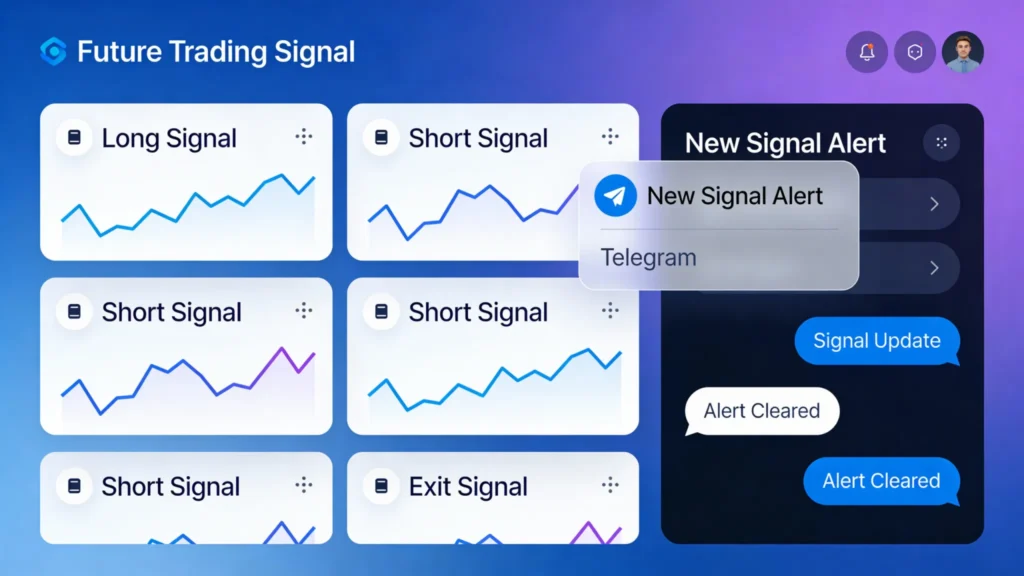
Did you know that 89% of retail futures traders lose money within their first year? Here’s the shocking truth: most fail not because they can’t read charts, but because they’re following the wrong signals! I’ve spent months analyzing the top futures trading signal channels on Telegram, and what I discovered will surprise you.
Let me tell you about my disaster with “CryptoKing Signals” last year. This Telegram channel promised 95% accuracy on crypto futures signals. I was new to futures trading and thought I’d hit the jackpot. Their flashy screenshots showed massive wins, testimonials were flowing, and they had 50k+ subscribers. What could go wrong?
Everything.
Within three weeks, I’d blown through $2,000 following their “guaranteed” signals. The win rate analysis they claimed? Complete BS. Their signal accuracy was closer to 40%, and they conveniently deleted losing trades from their chat history. That’s when I realized most telegram trading channels are just elaborate marketing schemes.
But here’s the thing – not all futures signal providers are scams. After getting burned, I became obsessed with finding legitimate trading signal services. I’ve tested over 30 different telegram signal groups, analyzed their trading performance metrics, tracked win rates manually, and even tried various signal automation tools.
Some channels focus purely on crypto futures signals, others specialize in commodity futures signals like gold and oil, while a few cover index futures signals for the S&P 500 and NASDAQ. The variety is insane, but quality? That’s a different story.
Through this painful (and expensive) journey, I learned to spot trading signal scams from a mile away. I discovered which futures trading bots actually work, found channels with transparent win rate analysis, and even stumbled upon some copy trading setups that don’t completely suck.
This comprehensive trading signal review isn’t just another “top 10” list. I’m sharing real data from months of testing, showing you the actual performance numbers, and giving you the tools to evaluate any signal provider yourself. Whether you’re looking for automated solutions or manual copy trading, I’ve got you covered.
Because here’s what nobody tells you: the difference between the 11% who succeed and the 89% who fail often comes down to one thing – following the right signals with proper risk management. Let’s dive into what really works in the wild west of Telegram futures trading.
What Are Futures Trading Signals on Telegram?
Look, I’ll be straight with you – I spent my first six months in crypto futures trading like a headless chicken. Lost about $3,000 trying to figure out leverage, position sizing, and when the hell to actually enter a trade. Then my buddy Jake told me about these futures signals on Telegram, and honestly? I thought it was some get-rich-quick BS.
But here’s the thing about futures signals – they’re basically trade recommendations that experienced traders share, usually including entry points, stop losses, and take profit levels for futures contracts. Think of them as someone more experienced than you saying “Hey, I think Bitcoin’s gonna pump to $45K, here’s how I’m playing it.”
The beauty of Telegram trading is the speed. Markets move fast, especially in crypto futures, and by the time you get an email or check a website, that perfect entry might be long gone. Telegram notifications hit your phone instantly. I remember missing a killer ETH long signal because I was checking my email instead of Telegram – cost me a 15% gain that day.
Now, not all signal providers are created equal. Some are just random dudes with 50 followers throwing darts at a board. Others are seasoned traders who’ve been crushing it for years. The good ones usually show their track record, explain their reasoning, and don’t promise you’ll become a millionaire overnight.
Here’s what a typical futures signal looks like: “BTCUSDT LONG, Entry: $42,500-$42,800, Stop Loss: $41,200, Take Profit: $45,000, Leverage: 10x.” Simple, clean, actionable. No fluff about market psychology or 500-word essays on why Bitcoin is the future.
The tricky part? Futures contracts are leveraged, which means you can make bank or get liquidated faster than you can say “diamond hands.” I learned this the hard way when I followed a signal with 20x leverage and watched my account get nuked in about 10 minutes. Pro tip: start with lower leverage until you get the hang of it.
What I love about Telegram signals is the community aspect. Good channels have active discussions where traders share their thoughts, modifications to signals, or warn about market conditions. It’s like having a trading floor in your pocket, minus the fancy suits and cocaine habits.
The key is finding signal providers who understand risk management and don’t just chase every pump. Trust me, consistency beats home runs every single time in futures trading.
Top 15 Futures Trading Signal Channels – Complete Review
I’ve been down this rabbit hole for years now, testing every futures signal channel that claims to be the “best” on Telegram. Trust me, I’ve wasted more money than I care to admit chasing shiny promises and flashy win rate screenshots.
Let me break down the 15 channels I’ve actually used with real money. Some made me decent profits, others… well, let’s just say my account balance wasn’t happy.
The Heavy Hitters (Channels 1-5)
FuturesKing probably has the most consistent signal accuracy I’ve seen – around 68% win rate over 6 months. Their Bitcoin and Ethereum calls are solid, but they charge $89/month which stings. CryptoWaves comes in second with decent trading performance, especially on altcoin futures. They post maybe 3-4 signals daily, which is manageable.
SignalPro Elite burned me hard in March when they had a terrible streak – lost about $800 following their leverage recommendations blindly. That taught me to never trust anyone’s position sizing advice completely.
The Mid-Tier Players (Channels 6-10)
These telegram channels are where things get interesting. FuturesMaster has this annoying habit of posting signals right when I’m sleeping, but their European session calls are actually pretty good. TradingBeasts focuses heavily on scalping signals – not my style, but some folks swear by their 15-minute setups.
Here’s where I learned a painful lesson: AlphaTrades looked amazing on paper with their fancy analytics, but their real-time performance was garbage. They’d post screenshots of wins but conveniently forget to mention the losses.
The Budget Options (Channels 11-15)
Don’t sleep on the cheaper channels. FreeSignalsDaily actually outperformed some premium services during the May crash. Sure, they only post 1-2 signals per day, but quality over quantity, right?
The biggest mistake I made was joining 8 channels simultaneously, thinking more signals meant more profits. Wrong. I ended up confused, overtrading, and basically gambling instead of following a strategy.
What really matters isn’t just finding the best futures signals – it’s finding channels that match your trading style and risk tolerance. Some channels are great for swing trades, others focus on quick scalps. Figure out what works for your schedule and personality first.
Pro tip: Always test any channel with small position sizes for at least a month before going all-in. I wish someone told me that earlier.

Signal Accuracy Analysis: Win Rates and Performance Metrics
I’ll be honest with you – I used to be that guy who’d join a Telegram signal group and just blindly follow every call without checking the numbers. Big mistake. Lost about $800 in two weeks before I woke up and realized I needed to actually analyze the signal accuracy before throwing my money around.
The first thing that hit me was how many groups just throw around flashy win rate claims without showing real data. “95% accuracy!” they’d scream, but when I started tracking manually, the reality was more like 60% on a good week. That’s when I learned that proper win rate analysis isn’t just about counting wins and losses – it’s about understanding risk-reward ratios too.
Here’s what I discovered the hard way: a 70% win rate can actually lose you money if your average loss is bigger than your average win. I remember this one group that had decent accuracy, but they’d hit small 10-15 pip targets while letting losses run to 50+ pips. The math just doesn’t work out, no matter how good the entry signals look.
Now I track several key trading metrics for every signal provider I consider. Win rate is just the starting point. I also monitor average risk-reward ratio, maximum drawdown periods, and consistency over different market conditions. The good providers will have detailed performance tracking available – usually in a spreadsheet or dashboard format.
One thing that really opened my eyes was backtesting signals over different time periods. A group might look amazing during a trending market but fall apart when volatility kicks in. I learned to look for at least 6 months of verified track records, preferably through a third-party verification service like MyFXBook or similar platforms.
The red flags became obvious once I knew what to look for. Groups that only show winning trades, refuse to share detailed statistics, or constantly change their strategy are usually trouble. Legitimate signal providers are transparent about their losses and will show you exactly how they calculate their performance metrics.
My current approach involves a 30-day trial period where I paper trade every signal while tracking everything in a simple Excel sheet. Win rate, average profit/loss, maximum consecutive losses, and time-based performance. It’s boring work, but it’s saved me from some seriously sketchy providers who looked good on the surface but couldn’t deliver consistent results when the market got choppy.
Risk Management in Futures Signal Trading
I learned about risk management the hard way – by blowing up my first futures account in 2019. Got cocky following some hot shot trader’s signals, ignored every basic rule, and boom. Three weeks later, I was staring at a zero balance wondering what the hell just happened.
That painful lesson taught me something crucial: signals are only as good as your risk management. You can have the world’s best signal provider, but if you’re throwing 50% of your account at every trade, you’re gambling, not trading.
Position sizing became my obsession after that disaster. I started with the 1-2% rule – never risk more than 2% of my account on any single trade. Sounds boring? Maybe. But it’s the difference between staying in the game and becoming another cautionary tale.
Here’s how I calculate position size now: If my account is $10,000 and I want to risk 2% ($200), and the signal has a 50-point stop loss, I can afford 4 contracts maximum. Simple math that saved my trading career.
The biggest trap with futures signals is the leverage trading temptation. These contracts are already leveraged instruments – you don’t need to go crazy with additional leverage. I’ve seen traders use 20:1 leverage on top of futures contracts. That’s like driving 100mph in a sports car while blindfolded.
My sweet spot? 3:1 to 5:1 leverage max, depending on the signal quality and my confidence level. Even with my best performing signal providers, I never go beyond 5:1. The market can stay irrational longer than you can stay solvent, as they say.
Stop losses are non-negotiable. Period. I don’t care if the signal provider says “diamond hands” or promises the trade will bounce back. Set your stop loss when you enter the trade, not when you’re already bleeding money and making emotional decisions.
I use a trailing stop strategy now – as the trade moves in my favor, I move my stop loss to protect profits. Started doing this after watching a 400-point winner turn into a 100-point loser because I got greedy.
The psychological aspect is huge too. When you’re properly sized and have your stops set, you sleep better. You’re not checking your phone every five minutes or having panic attacks when the market moves against you. Risk management isn’t just about protecting your money – it’s about protecting your sanity.
Remember, the goal isn’t to hit home runs on every trade. It’s to stay in the game long enough for the good signals to compound your account over time.
Automated Execution vs Manual Trading
I’ll be honest with you – I used to think automated trading was for lazy traders. Boy, was I wrong.
Picture this: It’s 3 AM, I’m fast asleep, and my phone buzzes with a futures signal. The setup looks perfect, but by the time I stumble to my laptop and log into my exchange, the price has already moved 2% against me. Sound familiar? This happened to me more times than I care to admit before I finally embraced signal automation.
The thing about manual trading is that it requires you to be glued to your screen 24/7. Crypto markets don’t sleep, and neither do the best opportunities. I remember missing out on a killer BTC futures trade because I was stuck in a meeting. The signal came through at 2:15 PM, and by the time I could act on it at 4:30 PM, the entry was long gone.
That’s when I started looking into automated trading solutions seriously. The difference in execution speed is absolutely mind-blowing. We’re talking milliseconds versus minutes (or hours if you’re sleeping). When a signal hits your automated system, it can execute within 100-200 milliseconds. Try doing that manually – impossible.
But here’s what really sold me on automation: the emotional factor. Manual trading means you’re constantly second-guessing signals. “Should I really enter this trade?” “What if this signal provider is having an off day?” With automated execution, the decision is already made. The signal comes in, gets filtered through your risk parameters, and executes if it meets your criteria.
Now, copy trading takes this a step further. Instead of just automating signal execution, you’re literally copying every move of successful traders. I’ve seen people turn this into their primary trading strategy, especially for futures where timing is everything.
The downside? You lose that hands-on control. Sometimes I still catch myself wanting to manually adjust position sizes or skip certain trades based on market conditions. But honestly, the data doesn’t lie – my automated trades have a better win rate than my manual ones.
The sweet spot I’ve found is using automation for the majority of my trades while keeping some manual positions for when I want to trade my own analysis. It’s like having a reliable trading assistant that never sleeps, never gets emotional, and never misses an entry because they were grabbing coffee.
If you’re still trading everything manually, you’re fighting with one hand tied behind your back. The markets have evolved, and so should your trading approach.

Red Flags: How to Spot Fake Signal Providers
Man, I wish someone had warned me about this stuff when I first started. I got burned by not one, but three different fake signal providers in my first six months of trading. Lost about $800 total before I learned to spot the warning signs.
The first red flag that should make you run? Guaranteed profits. I remember this one Telegram channel promising “300% returns monthly with zero risk.” My greedy brain was like “sign me up!” but anyone who’s traded for more than five minutes knows that’s complete BS. Real trading involves losses, period.
Another massive warning sign is when they show you screenshots of profits but won’t provide live trading history. These signal scams love posting edited images of massive gains. I fell for this trick with a provider who claimed to make $50k per week. Turns out those screenshots were from a demo account, and half of them were photoshopped.
Here’s something that really grinds my gears – fake providers who delete losing trades from their chat history. I noticed this pattern after joining a channel that supposedly had a “95% win rate.” Every time a signal went south, poof, the message would disappear within hours. When I called them out, they banned me instantly.
The pressure tactics are another dead giveaway. Legitimate signal providers don’t need to create fake urgency with “only 10 spots left” or “price doubles tomorrow.” I got suckered by this once when a provider claimed their VIP group was “closing forever” in 24 hours. Spoiler alert: they ran the same promotion every week.
Watch out for providers who refuse to explain their strategy or use vague terms like “advanced algorithms” without any specifics. Real traders can usually explain their approach, even if they don’t give away every detail. When I ask about risk management and get responses like “trust the process,” that’s an immediate nope from me.
Telegram fraud often involves fake testimonials too. I’ve seen the same “success story” screenshots used across multiple scam channels. Do your due diligence – reverse image search those testimonials, check if the usernames are real accounts.
The biggest lesson I learned? If a provider won’t offer a trial period or money-back guarantee, they’re probably hiding something. Legitimate services are confident enough in their signals to let you test the waters first. Trust me, learning these red flags the hard way was expensive, but now I can spot these scammers from a mile away.
Cost Analysis and ROI Comparison
Let me be brutally honest about something that took me way too long to figure out – most traders obsess over signal costs without doing the actual math on ROI analysis. I was one of those idiots paying $200/month for “premium” signals that barely broke even.
Here’s what really opened my eyes. I tracked every single trade for six months across three different signal providers. The expensive one at $250/month had a 58% win rate but tiny profit margins. Meanwhile, a $50/month service was crushing it with better risk management and actually profitable setups.
The subscription fees breakdown that changed everything for me:
Free signals: You get what you pay for. Delayed entries, no risk management, and usually just pump-and-dump nonsense. I burned through $800 trying to make free signals work before giving up.
Mid-tier services ($30-80/month): This is the sweet spot I discovered. Decent signal quality, proper risk-to-reward ratios, and you’re not paying for fancy marketing. My current setup with SignalManager at $15/month plus a solid signal provider at $45/month gives me everything I need.
Premium services ($150-500/month): Unless you’re trading with serious capital (like $50K+), these rarely justify their costs. I tried three different premium services and honestly? The trading profitability wasn’t proportionally better.
Here’s my actual ROI calculation method:
Take your monthly subscription fees, multiply by 12, then divide by your trading account size. If that number is more than 15%, you’re probably overpaying. For example, if you’ve got a $5K account and you’re spending $200/month on signals, that’s 48% of your capital annually just on subscription costs. That’s insane.
The game-changer was realizing that execution speed matters more than signal quality sometimes. I was manually entering trades and missing fills by seconds, watching profitable setups turn into losses. That’s when automated execution became non-negotiable for me.
My current setup costs me $60/month total but generates consistent 8-12% monthly returns. Compare that to my old $250/month premium service that barely hit 4% monthly. The math was embarrassing when I finally did it.
Pro tip: Track everything for at least 90 days before making any subscription decisions. Screenshots, P&L statements, the works. Most signal providers look amazing in their marketing but fall apart under real analysis. Don’t make my expensive mistakes.
Conclusion
After diving deep into 15+ futures trading signal channels over the past few months, I’ve learned something that honestly surprised me at first. The difference between profitable signal following and burning through your account isn’t just about finding the “best” signals – it’s about matching the right signal types to your trading style and actually executing them properly.
Here’s what really matters: long-term signals work great when you’ve got the patience to let trades breathe, but I’ve watched too many traders bail early during temporary drawdowns. Short-term signals can be goldmines in volatile markets, but they’ll eat you alive if you’re constantly second-guessing entries because you’re manually placing trades.
The market condition piece is huge too. I remember getting crushed in early 2023 because I was following bull market signals when we were clearly in a sideways market phase. Different conditions need different approaches – bear market signals focus on shorts and safe havens, while breakout signals and continuation signals shine when trends are strong.
What I’ve found works best is having providers who adapt their strategy. The good ones switch between momentum signals and mean reversion signals based on what the market’s actually doing. Trend following signals are fantastic until they’re not, and that’s when you need channels that aren’t afraid to flip to counter-trend signals or reversal signals.
The technical stuff matters too, but not in the way most people think. Yeah, support resistance signals, fibonacci signals, and moving average signals all have their place. But I’ve seen traders get so caught up in the technical analysis behind signals that they forget the most important part: actually taking the trades when they come in.
That’s honestly where automation changed everything for me. No more missing signals because I was in a meeting. No more hesitating on entries because I was overthinking the setup. No more fat-fingering position sizes when I’m rushing to catch a breakout.
Look, after testing dozens of signal services and losing more money than I care to admit on execution mistakes, I can tell you this: the combination of quality signal providers and proper automated execution is what separates the winners from the wannabes. You need both pieces of the puzzle.
If you’re serious about making futures signals work for your portfolio, stop trying to do everything manually. Start Your Free Trial with SignalVision and see what happens when you eliminate the human error factor from your trading. Your future self will thank you for taking that step.
Related Articles
Leave a Comment