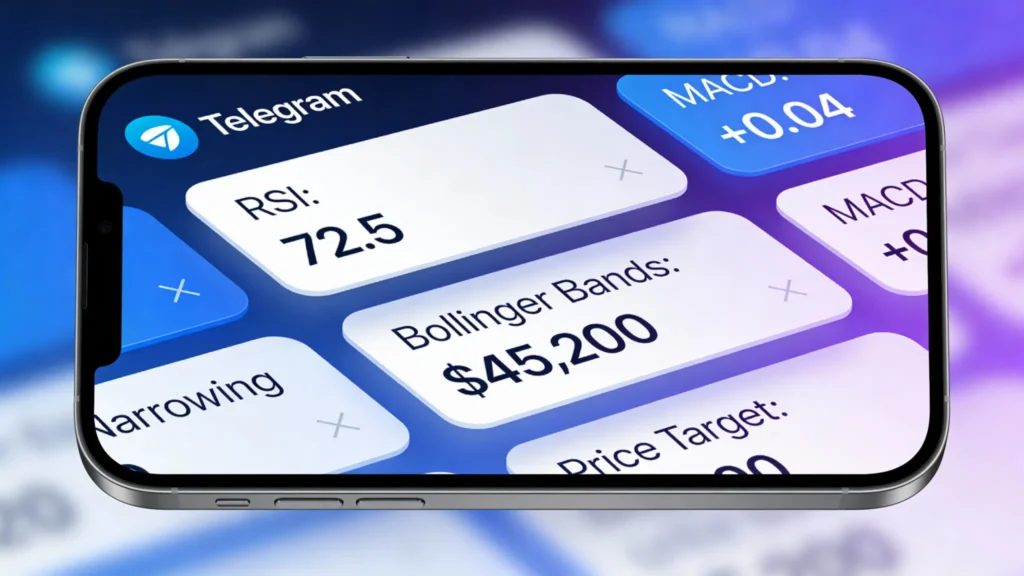
Did you know that over 85% of professional traders rely on technical analysis signals to make their trading decisions? I’ve been analyzing Telegram trading signals for years, and I can tell you this: the difference between profitable traders and those who lose money often comes down to understanding technical analysis signals properly.
Back in 2019, I was that guy frantically joining every crypto signals telegram channel I could find. I thought more signals meant better profits – boy, was I wrong! I’d get RSI signals from one provider saying «buy,» while another channel’s MACD signals screamed «sell» on the same asset. Talk about analysis paralysis.
Here’s what I learned the hard way: not all telegram trading signals are created equal. Some signal providers just throw random chart patterns at you without proper context. Others flood your phone with bollinger bands signals every five minutes, making it impossible to focus on quality setups.
The real game-changer came when I started understanding the technical indicators behind these signals. When you know why a moving average signal matters, or how fibonacci signals actually work in market structure, suddenly those Telegram notifications make sense. You’re not just blindly following – you’re making informed decisions.
I remember this one forex signals telegram channel that kept posting support resistance levels without explaining their methodology. Lost me about $800 before I realized they were just drawing random lines on charts! That’s when I got serious about learning proper technical analysis.
The truth is, signal accuracy depends heavily on understanding the underlying technical analysis. Whether we’re talking about crypto signals telegram channels or forex providers, the best signals come with proper education and context. You need to know why a signal exists, not just when to enter and exit.
In this comprehensive guide, we’ll dive deep into everything you need to know about technical analysis signals on Telegram. I’ll share the mistakes I’ve made (plenty of them), the strategies that actually work, and how to separate the wheat from the chaff when it comes to trading signals.
We’ll cover the essential technical indicators every trader should understand, from basic RSI signals to complex chart pattern recognition. Plus, I’ll show you how modern signal management tools can help you execute these signals without the stress and manual work that used to drive me crazy.
By the end of this article, you’ll have a clear roadmap for leveraging technical analysis signals effectively, whether you’re a complete beginner or someone looking to refine their existing approach.
What Are Technical Analysis Signals on Telegram?
I’ll never forget my first encounter with telegram trading signals. It was 2 AM, I was scrolling through crypto Twitter like a zombie, and someone mentioned this mysterious Telegram channel where «pros» were dropping signals left and right. My sleep-deprived brain thought I’d struck gold.
Turns out, technical analysis signals on Telegram are basically bite-sized trading recommendations that signal providers send to their channels. Think of them as those «hey, check this out» messages from your trading buddy, except these come from people who supposedly know what they’re doing.
Here’s the thing though – not all signals are created equal. The good ones use actual technical indicators like RSI, MACD, or moving averages to spot potential opportunities. They’ll tell you stuff like «BTC showing bullish divergence on the 4H RSI» or «ETH breaking above key resistance at $2,400.»
But here’s where it gets interesting. The really solid signal providers don’t just throw random coins at you. They analyze chart patterns – you know, those head and shoulders, triangles, and support/resistance levels that actually matter. I learned this the hard way after following a channel that basically just picked coins based on their cool names. Yeah, that didn’t end well.
Most technical analysis signals include a few key pieces: the asset (like BTC/USDT), the entry price, stop loss, and take profit levels. Some providers get fancy and include their reasoning – like «ascending triangle breakout with volume confirmation.» Others just drop a rocket emoji and call it a day.
The beauty of getting these signals through Telegram is the speed. Markets move fast, especially crypto, and by the time you see a setup on TradingView and do your own analysis, the opportunity might be gone. With telegram trading signals, you get that instant notification right on your phone.
What really separates the wheat from the chaff is transparency. Good signal providers show their win rates, explain their methodology, and aren’t afraid to post their losses. Bad ones? They delete losing trades faster than I delete embarrassing photos from college.
The technical indicators these providers use range from basic stuff like moving average crossovers to complex oscillators and momentum indicators. Some focus purely on price action and chart patterns, while others combine multiple timeframes for confirmation.

Essential Technical Indicators Used in Telegram Signals
I’ll be straight with you – when I first started following crypto signals on Telegram, I had no clue what half the indicators meant. Someone would drop «RSI oversold, MACD bullish divergence» and I’d just blindly follow along. That approach cost me about $800 in my first month because I didn’t understand what I was actually trading.
The reality is, most quality signal channels rely on four core indicators that you absolutely need to understand. Let me break them down based on what I’ve learned from tracking hundreds of signals over the past three years.
RSI signals are probably the most common you’ll see. The Relative Strength Index measures momentum on a scale of 0-100. When RSI drops below 30, it’s considered oversold – potentially a good buy signal. Above 70 means overbought, possibly time to sell.
Here’s what I wish someone told me early on: RSI works great in ranging markets but can stay «overbought» for weeks during strong trends. I remember watching Bitcoin’s RSI sit above 80 for almost two weeks straight in late 2021, and I kept expecting a crash that never came. Don’t use RSI alone – it needs confirmation from other indicators.
MACD crossover signals are another staple in Telegram channels. The MACD (Moving Average Convergence Divergence) shows the relationship between two moving averages. When the MACD line crosses above the signal line, it’s typically bullish. Cross below? Bearish.
I’ve found MACD works best on higher timeframes. Those 15-minute MACD signals that flood some channels? Most are just noise. But when I see a MACD crossover on the 4-hour or daily chart, that’s when I pay attention.
Moving average signals are probably the easiest to understand. When price is above the moving average, trend is up. Below it? Trend is down. Simple, right? The magic happens when multiple moving averages interact – like the 50 crossing above the 200 (the famous «golden cross»).
I use the 20 and 50 EMAs on most of my charts now. When both are sloping up and price is above them, I’m more confident taking long signals from my Telegram channels.
Bollinger bands strategy rounds out the essential four. These bands expand and contract based on volatility. When price hits the lower band, it might bounce up. Hit the upper band? Could reverse down.
The key insight I learned the hard way: Bollinger band squeezes (when bands get really tight) often precede big moves. I now watch for these setups because they usually lead to the most profitable signals in my feed.
Understanding these indicators transformed how I filter Telegram signals. Instead of blindly following every alert, I can now evaluate whether the technical setup actually makes sense.
How to Identify High-Quality Technical Analysis Signal Providers
I’ve been burned more times than I care to admit by flashy Telegram signal groups promising 90% win rates. One group I joined back in 2022 had this slick presentation with Lambos and screenshots of massive profits. Spoiler alert: I lost about $800 following their «guaranteed» signals before I wised up.
The harsh reality? Signal provider verification isn’t something most traders think about until it’s too late. I learned this lesson the hard way when I realized half the «proof» screenshots were photoshopped. Now I have a checklist I run through before trusting any signal group with my money.
First thing I look for is transparency in their track record. Reliable signal groups don’t hide their losses – they show you everything. If a provider only posts their wins and never mentions the trades that went south, that’s a massive red flag. I once found a group that claimed 85% accuracy but conveniently «forgot» to mention they had a 3-week losing streak the month before.
Here’s what separates the wheat from the chaff: legitimate providers explain their reasoning. They don’t just drop a «BUY BTCUSDT» message and disappear. They’ll tell you about support levels, resistance zones, maybe throw in some RSI analysis. Telegram scam signals are usually just random calls with rocket emojis and «TO THE MOON» nonsense.
I always check how they handle risk management too. Good signal providers will give you entry points, stop losses, and take profit levels. The sketchy ones? They’ll tell you to «HODL» even when a trade goes -40%. That’s not strategy – that’s gambling.
Another trick I use is lurking for at least two weeks before putting real money on their calls. I paper trade their signals and keep my own spreadsheet of results. You’d be shocked how many groups fall apart under this basic scrutiny. Signal accuracy claims of 80%+ usually crumble to around 45-55% when you actually track them properly.
The community vibe matters too. If the chat is full of people posting Lambo memes and talking about quitting their day jobs, run. Serious trading groups discuss risk, market conditions, and yes – their failures. I’ve found the best signal providers are the ones who admit when they’re wrong and adjust their approach.
One last thing – never join a group that asks for upfront payments of hundreds or thousands of dollars. The legitimate providers I follow charge reasonable monthly fees and offer trial periods. If they’re confident in their signals, they shouldn’t need your life savings upfront.
Reading and Interpreting Technical Signals on Telegram
Man, I can’t tell you how many times I’ve stared at a Telegram signal like it was written in ancient hieroglyphics. When I first started following crypto signals, I’d get these messages that looked something like «BTC/USDT LONG 🚀 Entry: 42,500-42,800 SL: 41,200 TP1: 44,000 TP2: 45,500» and I’d be sitting there like… okay, cool, but what does this actually mean?
Here’s the thing about signal interpretation – it’s not rocket science, but there’s definitely a learning curve. Most signal providers use a pretty standard format, and once you crack the code, it becomes second nature.
Entry points are usually the first thing you’ll see after the trading pair. When a signal says «Entry: 42,500-42,800,» they’re giving you a range, not a single price. I learned this the hard way when I kept waiting for the exact price of 42,500 and missed the entire move because Bitcoin was bouncing between 42,600 and 42,750. The range exists because markets are fluid – you don’t need to hit the exact bottom tick.
Now, stop loss levels – this is where I made my biggest rookie mistake. I saw «SL: 41,200» and thought it was just a suggestion. Spoiler alert: it’s not. Your stop loss is your insurance policy. It’s the point where you admit the trade isn’t working and cut your losses. I once ignored a stop loss on an ETH trade because «it’ll come back,» and ended up losing 15% instead of the planned 3%. Never again.
The beauty of good signals is they usually give you multiple take profit targets. When you see «TP1: 44,000 TP2: 45,500,» here’s what I do: I take 50% profit at TP1 and let the rest ride to TP2. Sometimes I move my stop loss to breakeven after hitting TP1. It’s called scaling out, and it’s saved my account more times than I can count.
One thing that confused me initially was the risk-to-reward ratio. If your entry is 42,650, stop loss at 41,200, and first target at 44,000, you’re risking about 1,450 points to make 1,350 points. That’s roughly 1:1, which isn’t terrible, but when you factor in TP2 at 45,500, suddenly you’re looking at potentially 2,850 points of profit. That’s where the magic happens.
Pro tip: Always check the timeframe the signal is based on. A scalping signal meant for 5-minute charts is very different from a swing trade signal based on daily analysis. I’ve seen people hold scalping signals for days and wonder why they’re not working. Context matters, folks.
Popular Chart Patterns in Telegram Technical Signals
I’ll be honest – when I first started following technical analysis signals on Telegram, I thought chart patterns were just fancy drawings that traders used to look smart. Boy, was I wrong. After missing out on a massive Bitcoin breakout because I ignored a clear triangle pattern signal, I decided to actually learn what these patterns meant.
The head and shoulders pattern is probably the most talked about in Telegram channels, and for good reason. I remember this one channel called out a perfect head and shoulders on Ethereum back in early 2022. The left shoulder formed around $3,800, the head peaked at $4,200, and the right shoulder topped out at $3,700. When it broke below the neckline at $3,400, ETH dropped like a rock to $2,800. That’s when it clicked for me – these patterns actually work when you know how to spot them.
But here’s the thing about head and shoulders signals in Telegram – half the time people call them too early. I’ve seen traders post «MASSIVE HEAD AND SHOULDERS FORMING» when there’s barely a left shoulder visible. The real money is made when patient analysts wait for the full pattern to complete and then call the neckline break.
Triangle patterns are where I’ve had my biggest wins though. There’s something beautiful about watching a triangle breakout unfold in real-time. Last month, I was following this signal about Solana forming an ascending triangle. The price kept hitting resistance at $185 but the lows kept getting higher – $165, $170, $175. When it finally broke above $185 with volume, it shot to $220 within days.
The double top pattern is another favorite in crypto Telegram channels, especially during bull runs when everyone’s getting too greedy. I learned this lesson the hard way with MATIC. It hit $2.85 twice with a little dip to $2.40 in between. Classic double top setup. But I was so caught up in the hype that I ignored the signal calling for a breakdown. Sure enough, it crashed to $1.80 over the next few weeks.
What I’ve noticed is that the best Telegram signal providers don’t just show you the pattern – they explain the psychology behind it. They’ll tell you why buyers are getting exhausted at resistance levels, or why sellers are stepping in at previous highs. That context makes all the difference when you’re trying to decide whether to trust the signal or not.
The key is finding channels that wait for confirmation before posting. Anyone can draw lines on a chart, but the profitable signals come from traders who wait for volume confirmation and proper breakouts before hitting send.
Risk Management Strategies for Telegram Signal Trading
Let me tell you about the time I blew up 40% of my account following a «guaranteed» Telegram signal. Yeah, that stung. The signal itself wasn’t even wrong – Bitcoin did pump exactly like they predicted. But I threw way too much money at it because I got greedy and forgot everything I knew about risk management.
That painful lesson taught me that following signals without proper risk controls is like driving blindfolded. You might get lucky for a while, but eventually you’re gonna crash hard.
The first thing I learned was position sizing. I now never risk more than 2-3% of my total portfolio on any single signal, no matter how «sure» it looks. When that hot tip comes through at 2 AM promising 500% gains, I stick to my rules. Trust me, your future self will thank you when that moonshot turns into a crater.
Here’s my position sizing formula that’s saved my ass countless times: If my account is $10,000, I risk maximum $200-300 per trade. Sounds boring? Maybe. But I’m still trading two years later while half the guys in those signal groups have gone silent.
Trading discipline is where most people fail miserably. I’ve seen traders nail 7 winners in a row, then lose it all on trade #8 because they got cocky and doubled down. The market doesn’t care about your winning streak – it’ll humble you real quick.
I use stop losses religiously now, even when the signal provider doesn’t mention them. Usually set them at 5-8% below my entry, depending on the coin’s volatility. Yeah, I get stopped out sometimes on wicks, but I sleep better at night knowing my downside is protected.
Portfolio allocation is another game-changer most people ignore. I keep 60% in established coins like Bitcoin and Ethereum, 30% in mid-caps from signals, and only 10% in those crazy altcoin moonshots. This way, even if my signal trades go sideways, my portfolio doesn’t implode.
One trick that’s worked well: I track every signal’s performance in a simple spreadsheet. Win rate, average return, maximum drawdown – the whole nine yards. After 6 months, the data tells you which signal providers are actually worth following and which ones are just lucky amateurs.
The hardest part about risk management isn’t learning the rules – it’s following them when your emotions are screaming to do otherwise. But that’s what separates the survivors from the casualties in this game.
Automating Technical Analysis Signal Execution
Here’s where I made my biggest trading mistake – and learned the most valuable lesson about automated trading.
Picture this: I’m sitting at my desk at 3 AM, eyes burning from staring at charts all day. A perfect RSI divergence signal pops up on Bitcoin, exactly the setup I’d been waiting for. But I’m exhausted, second-guessing myself, and by the time I finally pull the trigger… the move’s already halfway done. Sound familiar?
That’s when I realized manual execution was killing my profits. The signals were solid, but my human emotions and reaction time were the weak links. Signal automation became my game-changer, but not without some painful lessons first.
My first attempt at trading bots was a disaster. I downloaded some free Python script from GitHub, thinking I was being smart. The thing worked great in theory – until it started executing trades based on false signals during a flash crash. Lost 15% of my account in one night because I hadn’t properly configured the risk parameters.
The real breakthrough came when I started focusing on proper automation infrastructure. You can’t just throw signals at a bot and hope for the best. You need systems that can interpret different signal formats, validate them against market conditions, and execute with proper risk management.
Here’s what I learned the hard way about backtesting signals: historical performance means nothing if your automation can’t replicate those results in real-time. I spent weeks backtesting a momentum strategy that looked incredible on paper. But when I went live, slippage and execution delays completely destroyed the edge.
The key is finding automation that bridges the gap between signal recognition and execution seamlessly. Modern automated trading systems can process Telegram signals instantly, validate them against your risk rules, and execute within milliseconds. No more fumbling with exchange interfaces or missing opportunities because you were in a meeting.
What really changed my game was discovering systems that could handle any signal format automatically. Whether it’s a simple «BUY BTC» or a complex technical analysis breakdown with multiple entry points, the automation just works. No coding required, no manual configuration for each new signal provider.
The emotional relief alone is worth it. No more 3 AM wake-up calls, no more FOMO decisions, no more watching perfect setups slip away because I was stuck in traffic. The signals do their job, the automation does its job, and I actually get to sleep at night.
Conclusion
Look, I’ve been down this road for years now, and I can tell you that technical analysis signals on Telegram aren’t just another trading fad – they’re genuinely game-changing when you approach them right. But here’s the thing that took me way too long to figure out: success isn’t about finding the «perfect» signal provider with a 90% win rate (spoiler alert: they don’t exist).
The real magic happens when you start treating signal evaluation like a science. I remember spending months chasing flashy providers who promised the moon, only to watch my account slowly bleed out because I never bothered checking their profit factor or doing proper drawdown analysis. Don’t be me from three years ago – always demand signal backtesting results and insist on seeing forward testing data before you commit a single dollar.
Here’s what actually works: Start with signal paper trading. Seriously, I cannot stress this enough. Every signal provider I follow now had to prove themselves through months of paper trading before I ever considered live signal trading with real money. It’s boring, sure, but it’ll save you from those gut-wrenching losses that come from jumping straight into signal copying without doing your homework.
The beauty of modern signal mirroring and social trading platforms is that you can actually see real performance data now. No more trusting screenshots or cherry-picked trades. Look for providers who share their complete trading history, including the ugly drawdowns and losing streaks. Copy trading has evolved way beyond the Wild West days – legitimate signal marketplaces now require transparency that would’ve been unthinkable five years ago.
When it comes to signal subscription costs, I’ve learned that expensive doesn’t always mean better. Some of my most profitable signal providers charge reasonable signal fees because they make their real money from performance, not from hyping up their courses. But cheap isn’t always good either – if someone’s charging $5/month for «premium signals,» run the other way.
The biggest lesson? Don’t put all your eggs in one signal basket. I typically follow 3-4 different providers across different strategies and timeframes. It’s like having a diversified portfolio but for signal sources.
Whether you’re manually executing trades or looking for full automation, the key is finding that sweet spot between reliable signals and proper risk management. Trust me, the perfect setup exists – you just need the right tools to make it happen seamlessly.
Start Your Free Trial with SignalVision today and experience what real signal management looks like. Your future trading self will thank you for taking that first step toward professional-grade signal execution.
Related Articles

Leave a Comment