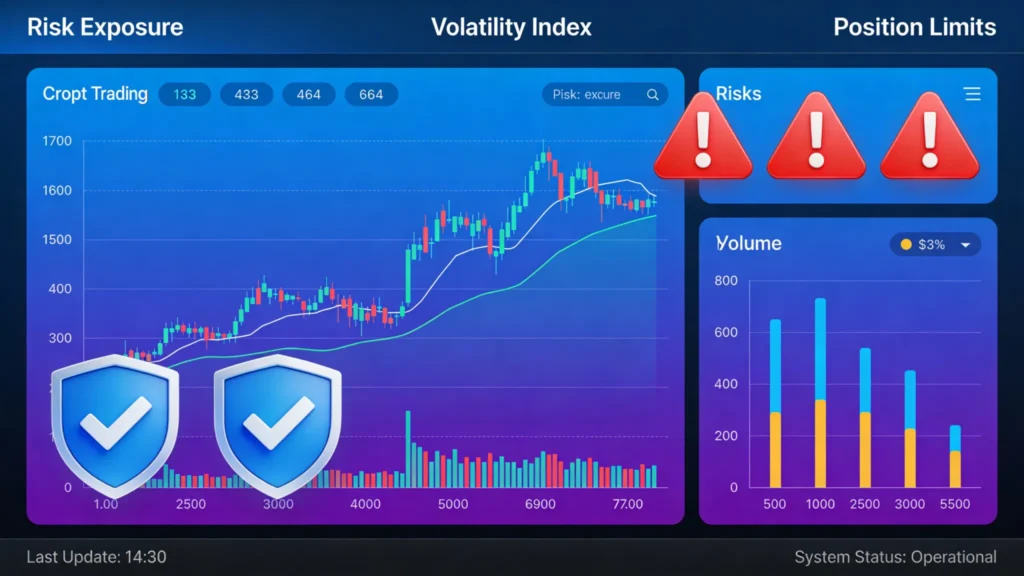
Did you know that 95% of crypto signal traders lose money within their first year? Yeah, that stat hit me like a truck when I first heard it – mainly because I was part of that 95%. I remember my early days following telegram crypto signals, thinking I’d found the holy grail of easy money. Spoiler alert: I hadn’t.
My wake-up call came during the 2022 market crash. I was blindly following this “premium” signal provider, throwing 20% of my portfolio into each trade because their win rate looked impressive on paper. When Bitcoin tanked from $69k, my account went down faster than the Titanic. That’s when I realized the harsh truth – the difference between profitable signal trading and blown accounts isn’t the quality of signals; it’s how you manage risk when following them.
Here’s what nobody tells you about crypto signal risk management: it’s not sexy, it’s not exciting, and it definitely doesn’t promise 1000% gains overnight. But it’s the only thing standing between you and financial ruin in this volatile market. I learned this lesson the expensive way, losing about 60% of my trading capital before I finally got serious about position sizing strategies and stop loss management.
The crypto signal space is absolutely flooded with providers promising the moon, but most traders focus on the wrong metrics. They obsess over win rates and profit percentages while completely ignoring signal provider evaluation and proper risk controls. I used to be that guy, screenshot-ing massive gains from signal groups while conveniently ignoring the string of losses that wiped out weeks of profits.
What changed everything for me was understanding that successful signal trading psychology isn’t about finding the perfect signal – it’s about surviving long enough to compound small, consistent gains. This means mastering portfolio risk management, implementing automated risk management systems, and developing a systematic approach to crypto signal analysis.
In this guide, I’m going to share everything I wish I’d known before I started following telegram crypto signals. We’ll dive deep into practical position sizing strategies, explore effective take profit strategies, and discuss how to properly evaluate signal providers without falling for marketing hype. You’ll learn about signal execution risk, crypto volatility management, and why trading bot risk controls might be your best friend in this chaotic market.
Trust me, after burning through more money than I care to admit, I’ve figured out what actually works. Let’s make sure you don’t repeat my expensive mistakes.
Understanding Risk in Telegram Crypto Signal Trading
I’ll never forget the day I blew through $2,000 in less than three hours following a “guaranteed” signal from some Telegram channel called “Crypto Moon Kings.” The admin had this flashy profile with Lamborghini photos and claimed 95% win rate. Yeah, right.
That painful lesson taught me everything I needed to know about signal trading risks in the crypto world. The reality is, most traders jump into Telegram signals without understanding what they’re actually signing up for. It’s like driving blindfolded on a highway – you might get lucky for a while, but eventually, you’re gonna crash.
Here’s what nobody tells you about signal reliability: even the best signal providers are wrong 30-40% of the time. I’ve tracked dozens of channels over the years, and the ones claiming 90%+ win rates? They’re either lying, cherry-picking their results, or counting tiny 0.5% gains as “wins” while ignoring the 15% losses.
The psychology part is where things get really messy. When you’re following someone else’s trades, you lose that crucial decision-making muscle. I remember getting so dependent on signals that I couldn’t make a single trade decision on my own. Every time the market moved, I’d frantically check five different Telegram channels looking for validation.
Then there’s the FOMO factor. Signal channels create this artificial urgency – “BUY NOW! LAST CHANCE!” – that makes you act without thinking. Telegram trading psychology is designed to bypass your rational brain and hit those emotional triggers. I’ve seen people mortgage their houses because some anonymous guy with a rocket emoji username said Bitcoin was going to $200k “next week.”
The worst part? Most signal providers disappear when things go south. That Crypto Moon Kings channel? Vanished after three consecutive losing streaks. No explanation, no apology, just gone. Left hundreds of followers holding bags of worthless altcoins.
But here’s what I learned from tracking crypto signal reliability for years: the good providers are transparent about their losses, show real trading history, and never promise guaranteed returns. They understand risk management isn’t just about stop losses – it’s about position sizing, portfolio diversification, and having realistic expectations.
The key is treating signals as one piece of information, not gospel truth. I still follow a few quality channels, but now I do my own research, set my own risk parameters, and never risk more than 2% of my portfolio on any single signal. Trust me, your future self will thank you for being boring with risk management.

Essential Position Sizing Strategies for Signal Trading
I’ll be honest – I used to think position sizing was just fancy talk for “how much money should I throw at this trade?” Boy, was I wrong. My first month following Telegram signals, I’d see a “100x potential” call and dump 30% of my portfolio into it. Spoiler alert: it didn’t end well.
The reality hit me hard when I lost nearly half my account on what seemed like a “sure thing” signal. That’s when I learned that position sizing isn’t just about maximizing gains – it’s about surviving long enough to actually make those gains.
Here’s what I wish someone had told me from day one: your risk per trade should never exceed 1-2% of your total portfolio. Sounds conservative? Maybe. But it’s the difference between being around for the next bull run or explaining to your spouse why the vacation fund is gone.
I developed a simple system that’s saved my butt countless times. For high-confidence signals – you know, those rare gems where everything aligns perfectly – I’ll risk up to 2% of my portfolio. Medium confidence gets 1.5%, and anything I’m unsure about gets a measly 1%. It’s not sexy, but it works.
The tricky part is determining signal confidence. I look at a few things: Does the signal provider show their track record? Are they explaining their reasoning, or just posting rocket emojis? How’s the technical analysis backing it up? If I can’t answer these questions confidently, my position size shrinks accordingly.
Portfolio allocation is another beast entirely. I learned this the hard way when I had 80% of my money in altcoins during a market crash. Now I keep a core allocation: 40% Bitcoin, 30% major altcoins, 20% for signal trading, and 10% cash for opportunities. Your numbers might be different, but having a plan beats winging it every time.
One trick that’s been a game-changer: I calculate my position size before I see the signal. Sounds backwards, right? But when you’re staring at a “MOON MISSION” call at 2 AM, your brain isn’t exactly running risk calculations. Having predetermined position sizes based on your current portfolio value removes emotion from the equation.
Remember, the goal isn’t to hit home runs on every trade. It’s about staying in the game long enough for those home runs to actually matter. Trust me, your future self will thank you for being boring with your position sizing today.

Stop Loss and Take Profit Management Techniques
I learned about stop loss strategies the hard way back in 2021 when I watched a perfectly good DOGE position turn into a disaster. Had a 40% gain, got greedy, and watched it crash back to -20%. That’s when I realized that knowing when to exit is just as important as knowing when to enter.
The thing about take profit levels is that most people either set them too tight or don’t set them at all. I used to be in that second camp – thought I was smart enough to time the market manually. Spoiler alert: I wasn’t. Now I always set multiple take profit targets, usually at 25%, 50%, and 75% of my expected move.
Here’s what works for me with stop losses. I never risk more than 2% of my account on a single trade, period. But within that 2%, I use a tiered approach. If I’m entering at $100, I’ll set my initial stop at $95 (5% down), but I also have a mental stop at $92 where I bail completely if things look really ugly.
Trailing stops changed my game completely, though they’re tricky beasts. I got burned early on setting them too tight – got stopped out of a SOL trade that would’ve made me 200% because I had my trailing stop at 8%. Now I use wider trailing stops, usually 15-20% for crypto, and only activate them after I’m already 20% in profit.
The psychological part of exit strategies is brutal. Your brain fights you every step of the way. When you’re up 30%, it screams “hold for more!” When you’re down 8%, it whispers “it’ll come back.” I’ve found that automation helps a ton here – when SignalManager executes my exit levels automatically, I don’t have to fight my own emotions.
One technique that’s saved my ass multiple times is the “scale out” approach. Instead of going all-in or all-out, I take profits in chunks. At 20% gain, I sell 25% of my position. At 40%, another 25%. This way, I lock in some gains while still having skin in the game if the trade keeps running.
The biggest mistake I see people make? Moving their stop losses down when a trade goes against them. Never, ever do this. That’s not risk management – that’s gambling. If your original analysis was wrong, take the L and move on. There’s always another signal coming.

Evaluating and Vetting Telegram Signal Providers
I learned this lesson the hard way when I threw $500 at a signal provider who claimed 95% win rates. Spoiler alert: they had cherry-picked their best three trades from the past month and called it a “track record.” That was an expensive education in signal provider evaluation.
The first thing I do now is dig deep into their actual performance history. Real signal providers will show you months of data, not just their highlight reel. I look for at least 3-6 months of consistent posting with transparent results. If they’re only showing screenshots of profits without the losses, that’s a massive red flag.
Track record verification became my obsession after getting burned multiple times. I started keeping my own spreadsheet of every signal they posted, tracking entry points, exit points, and actual outcomes. You’d be shocked how many “80% accuracy” channels actually hover around 45-50% when you do the math yourself.
Here’s what I’ve learned to look for during signal channel analysis: consistent posting schedules, detailed reasoning behind trades, and most importantly, they admit when they’re wrong. The best providers I’ve found actually post their losses and explain what went wrong. That’s gold.
I also pay attention to how they handle risk management in their signals. Do they provide stop losses? Take profit levels? Position sizing recommendations? Or are they just throwing out “BUY BITCOIN NOW 🚀🚀🚀” with zero context? The latter usually means they’re more interested in pumping their own bags than helping you make money.
One trick that’s saved me countless times: I’ll follow a new provider for at least two weeks without risking any real money. I paper trade their signals and see how they actually perform. It’s amazing how different the results look when you’re not caught up in the FOMO of their marketing hype.
The community aspect matters too. I check if other members are posting real results or just emoji reactions. Genuine signal channels have members discussing trades, asking questions, and sharing their own experiences. If it’s just the admin posting signals to silent followers, something’s off.
Look for providers who explain their methodology. The best ones I’ve worked with will break down their technical analysis, explain market conditions, and give you the education to understand why they’re making these calls. They’re teaching you to fish, not just throwing fish at you.
Remember, even the best signal providers have losing streaks. What separates the good ones from the scammers is how they handle those rough patches and whether their long-term track record actually holds up to scrutiny.

Advanced Risk Management Tools and Automation
I’ll never forget the night I woke up at 3 AM to find my portfolio down 40%. A single leveraged trade had gone completely sideways while I was sleeping, and my manual stop-loss orders? Yeah, they didn’t trigger because of some weird market gap. That’s when I realized I needed to get serious about automated risk management.
The thing about trading crypto signals is that markets never sleep, but we do. I learned this the hard way after missing several critical exit points because I was either asleep, at work, or just plain distracted. Manual risk management only works if you’re glued to your screen 24/7, which honestly isn’t sustainable.
Portfolio tracking became my lifeline after that disaster. I started using tools that could monitor my entire portfolio in real-time, not just individual trades. The key insight? You need to see the big picture. One winning trade doesn’t mean much if three others are bleeding you dry. I set up alerts for when my total portfolio dropped more than 5% in a day – saved my ass more times than I can count.
But here’s where things get really interesting: signal automation changed everything for me. Instead of manually copying trades and hoping I got the position sizing right, I found tools that could automatically execute signals with pre-set risk parameters. No more fat-finger mistakes, no more “oh crap, I forgot to set a stop-loss” moments.
The real game-changer was drawdown monitoring. I set up automated systems that would pause all trading if my account hit certain drawdown levels. Like, if I’m down 15% from my peak, everything stops until I can reassess. It’s like having a circuit breaker for your emotions – because let’s be honest, when you’re in a losing streak, your judgment gets cloudy.
One tool that’s been a total lifesaver is having automated position sizing based on my current account balance. So if I take a few losses and my balance drops, my position sizes automatically adjust down. It prevents that dangerous spiral where you keep betting the same amounts with a smaller bankroll.
The automation also handles something I used to screw up constantly: partial profit-taking. Now when a trade hits certain profit levels, it automatically closes portions of the position. Takes the emotion completely out of it. No more watching a 50% winner turn into a 10% loser because I got greedy.
Trust me, if you’re serious about trading telegram signals long-term, you need these automated safeguards. Your future self will thank you when you avoid those brutal drawdowns that can wipe out months of gains in a single bad day.

Market Condition Adaptation and Signal Filtering
Here’s something that took me way too long to figure out – not all signals are created equal, and definitely not all market conditions deserve the same approach. I learned this the hard way during the May 2022 crash when I kept following the same bullish signals that worked great during the previous bull run. Spoiler alert: it didn’t end well.
The thing about market conditions is they change faster than your mood on a Monday morning. What I’ve discovered after years of getting burned is that you need to be like a chameleon – constantly adapting your strategy based on what the market’s throwing at you.
During high volatility periods, I now cut my position sizes in half automatically. Sounds conservative? Maybe. But I’d rather make smaller profits consistently than watch my account get nuked by a random 20% swing that came out of nowhere. Volatility adjustment isn’t just fancy terminology – it’s survival.
I started keeping a simple spreadsheet where I track different signal providers’ performance across various market conditions. Bull markets, bear markets, sideways chop – you name it. Some guys who absolutely crush it during uptrends become liability central when things get choppy. That’s where proper signal filtering becomes your best friend.
One technique that’s saved my ass multiple times is correlation analysis. Sounds complicated, but it’s really not. I just check if multiple signal providers are all calling the same trade. If five different channels are screaming “BTC to the moon” at the exact same time, that’s usually my cue to either skip it entirely or reduce my position size significantly.
The crowd is wrong more often than they’re right, especially at turning points. I’ve seen too many “sure thing” trades get absolutely wrecked because everyone and their grandmother was on the same side.
Here’s my current filtering process: First, I check the overall market sentiment using fear and greed index. Below 25 or above 75, I’m extra cautious with any signals. Second, I look at Bitcoin’s daily chart – if it’s painting ugly red candles, I’m not touching altcoin signals with a ten-foot pole.
Third, I actually read the signal provider’s reasoning. If they can’t explain why they’re taking a trade beyond “looks good” or “breakout incoming,” I’m out. The best signals come with clear technical reasoning and realistic risk-reward ratios.
The market doesn’t care about your feelings or your bills. Adapting your signal selection to current conditions isn’t being wishy-washy – it’s being smart. Trust me on this one.
Building Your Personal Risk Management Framework
Look, I’m gonna be straight with you – most traders think having a risk management framework means just setting stop losses and calling it a day. I learned the hard way that’s like bringing a butter knife to a gunfight.
Back in 2021, I was riding high on some decent wins from Telegram signals. Had this cocky attitude where I’d just wing it based on “gut feeling.” Then came that brutal May crash, and my portfolio got absolutely wrecked. Lost about 60% in two weeks because I had zero structure. That’s when I realized I needed a proper risk management framework – not just rules, but an actual system I could follow religiously.
Here’s what I built, and honestly, it’s saved my ass more times than I can count. First thing – create a trading checklist that you go through before every single trade. Mine has stuff like: Is this signal from a proven source? What’s my position size based on my 2% rule? Where’s my stop loss? What’s my target? Sounds boring, but this checklist has stopped me from making so many stupid FOMO trades.
The game-changer though was implementing proper performance tracking. I use a simple spreadsheet where I log every trade – entry price, exit price, profit/loss, signal source, even my emotional state when I entered. This isn’t just about numbers; it’s about patterns. I discovered I was consistently losing money on weekend trades because I was being too aggressive. Now I avoid trading Saturdays and Sundays unless it’s a screaming opportunity.
But here’s the part most people skip – emergency protocols. What happens when everything goes sideways? I’ve got three levels: Yellow alert (down 5% for the day – reduce position sizes), Orange alert (down 10% – stop all new trades), and Red alert (down 15% – close everything and take a break). Sounds dramatic, but having these triggers removes emotion from the equation when you’re panicking.
The framework also includes weekly reviews where I analyze what worked and what didn’t. Sometimes I’ll spot that I’m getting too comfortable with larger position sizes, or that I’m ignoring my own rules during volatile periods. It’s like having a trading therapist session with yourself.
Your framework doesn’t need to be complex – mine fits on one page. But it needs to be yours, based on your risk tolerance and trading style. The key is actually following it when the market’s going crazy and your brain is telling you to abandon ship.
Conclusion
Look, I’ve been trading crypto signals for years now, and I can tell you this with absolute certainty: mastering risk management transforms signal trading from gambling into systematic profit generation. It’s the difference between blowing up your account in three months or building sustainable wealth over years.
Remember: the best signal in the world means nothing without proper risk controls. I’ve seen traders get 90% win rates on paper but still lose money because they didn’t understand position sizing. I’ve watched people chase pump and dump schemes because they ignored the red flags we talked about.
The framework we’ve covered isn’t just theory – it’s battle-tested stuff that actually works. Exchange security protocols, proper wallet security practices, and solid private key management form your foundation. Without these basics, you’re building a house on sand.
But here’s what really separates winners from losers: the discipline to stick to your risk management rules even when FOMO kicks in. When Bitcoin’s pumping and everyone’s making money, it’s tempting to throw caution to the wind. Don’t do it. That’s exactly when most people get burned.
The regulatory compliance and crypto tax implications we discussed aren’t just boring paperwork – they’re what keep you trading legally and profitably long-term. I learned this the hard way during my first tax season. Trust me, keeping proper audit trail maintenance saves you massive headaches later.
Signal provider licensing and crypto trading ethics matter more than most people realize. The wild west days of crypto are ending, and the traders who survive will be those who operate within proper frameworks. Look for crypto signal communities with solid peer review systems and transparent performance reporting.
Market manipulation risks and signal transparency issues will always exist, but now you know how to spot them. When someone’s pushing signals without showing their track record, or when a community lacks proper signal sharing legality guidelines, run the other way.
Start implementing these strategies today and protect your capital while maximizing your trading potential. Begin with position sizing – that’s your biggest bang for buck. Then work on identifying quality signal providers who follow crypto trading ethics.
Ready to put this into practice? Start Your Free Trial with SignalVision to automate your risk management and execute signals with built-in safety controls. Our system handles the technical stuff while you focus on strategy.
Your future self will thank you for taking risk management seriously today. The market will always be volatile, but your approach doesn’t have to be.
Related Articles


Leave a Comment